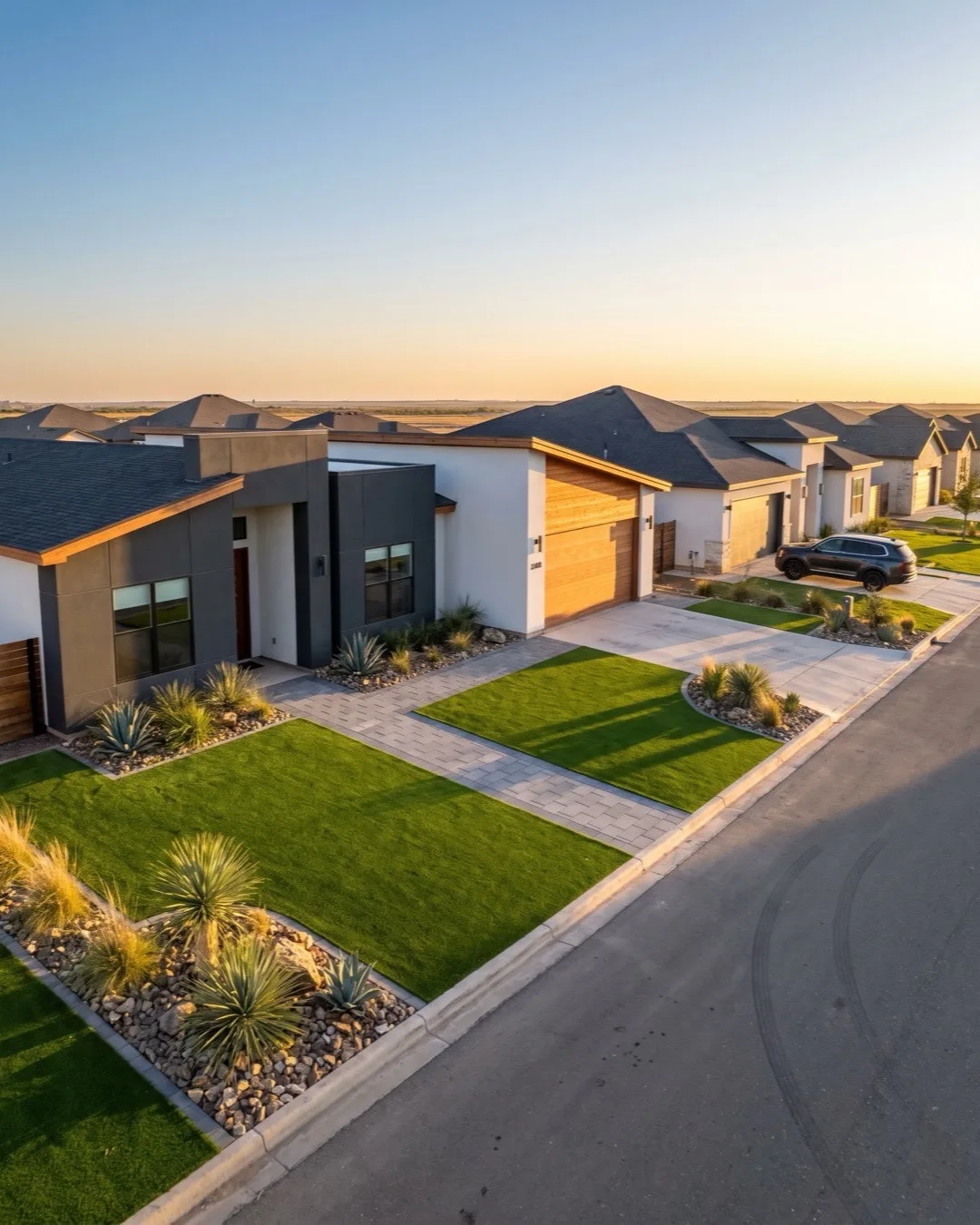
Lubbock Artificial Turf installs artificial grass as one piece of a drought-tolerant yard, alongside gravel beds, decomposed granite, boulders, mow-strip transitions, and native or adapted plantings on drip. Say the honest part first: xeriscape is a design approach, not a product you buy. Turf is the element that keeps a panel of usable green in a yard that has otherwise gone low-water. Quotes are free and there is no obligation.
Lubbock is the reason this design shows up here more than in most of Texas. The city averages 18.33 inches of rain a year in a cool semi-arid climate, and outdoor watering is held to two days a week by house number, no Sundays, from April through September, with midday watering prohibited. Underneath the whole region is the Ogallala Aquifer, which is being drawn down at an unsustainable rate; the city is adding a pipeline from Lake Alan Henry expected to supply 3.2 billion gallons annually. There is no city turf rebate in Lubbock, so nobody should be selling you one.
A good low-water yard is a plan, not a rock pit. Planted zones get grouped by water need and put on drip. Gravel and granite go where nothing has to grow. Boulders and edging hold the lines so the materials stay where they were put. Then one turf panel, sized to the part of the yard people and dogs actually stand on, carries the green without a sprinkler zone attached to it.
The mistake is turfing the whole lot out of habit. We measure the part that gets walked, played on, or looked at from the porch and turf that, then let gravel, granite, and plantings take the rest. A smaller turf panel is a smaller number on the quote and a better-looking yard.
Gravel, decomposed granite, and boulders
The low-water field is crushed rock or decomposed granite laid over a prepared subgrade, with boulders set to break up the flat and give the eye something to land on. Granite compacts into a walkable path surface; loose gravel stays loose and reads as a bed. Which one goes where is a design call, made before anything is hauled in.
Native and adapted plantings on drip only
Plants get grouped by water need and fed with drip lines, so the only irrigation left in the yard runs to things that are actually alive. The turf panel takes none of it. Zones that used to spray a lawn get capped or converted rather than abandoned in place.
Mow strips and edges that hold the lines
Every material change needs a hard edge or the yard blurs within a season: gravel migrates into turf, turf lifts into beds. Mow strips, steel or bender board, and paver bands separate the zones, and the turf perimeter fastens to a nailer board with galvanized spikes at close spacing. In the tenth-windiest city in the country, averaging 12.4 miles per hour, a loose edge does not stay put.
Drought-tolerant conversions arrive in four shapes. The materials list barely changes; the proportions do.
Front Yard Xeriscape Conversions
The most common version: the thirsty front lawn comes out, beds and gravel take the outer edges, and a clean turf panel stays green between the walk and the drive. It is judged from the street, so the cuts against concrete are the whole game.
Full Lawn Removal With a Turf Island
Whole-yard conversions where irrigated grass disappears entirely and one shaped turf island remains, usually where the kids or the dogs go. Everything around it becomes granite, gravel, and planting beds on drip.
Parkways, Medians, and Curb Strips
The strip between the sidewalk and the curb is the hardest ground in any yard to keep alive, and the least useful to water. Gravel with a few adapted plants, or a narrow turf run where you want green, both beat a dead strip.
Phase-One Conversions
Plenty of homeowners do the front this year and the back later, or convert the planting beds first and add the turf panel after. Splitting the project into phases is normal, and it is easier when the zone plan is drawn for the whole yard up front.
A xeriscape conversion runs the standard turf install with two extra jobs bolted on: zoning the yard, and reworking the irrigation instead of ripping it out.
1
Draw the zones before anything is dug
Turf panel, planting beds, gravel and granite fields, paths, and where boulders land, settled on paper. This is also where plants get grouped by water need, which is what makes a single drip zone work later.
2
Sod out, irrigation reworked
Old sod, roots, and three to four inches of soil come out. Heads inside the turf footprint get capped and lines marked, and the zones feeding beds and trees get converted to drip rather than abandoned.
3
Base under the turf, subgrade under the gravel
Crushed base goes in under the turf panel, wetted and compacted in lifts, graded to fall away from the house. The gravel and granite fields get their own prepared subgrade so they stay firm instead of sinking into soft ground.
4
Edging set, turf laid, seamed, and fastened
Mow strips and bender board go in first so every material has a hard boundary. Turf rolls relax, get cut to the perimeter, seam on tape and adhesive with the grain one direction, and fasten to the nailer board.
5
Gravel, plants, infill, and broom
Rock and granite go in to grade, boulders get set, plants go in with drip emitters, and the turf gets its infill power-broomed in. The yard is blown clean and the transitions get walked before anyone leaves.
How Much Does a Xeriscape Turf Conversion Cost in Lubbock?
For the turf portion, published national guides put installed artificial turf at roughly $5 to $20 per square foot, with most residential lawns landing between $8 and $14, which puts a 500-square-foot panel at about $4,000 to $7,000. Those are published national ranges, not a quote. The gravel, granite, boulders, edging, plants, and drip conversion are quoted separately, and we will not print a national range for that side of the work that we cannot source.
One thing we will not do is hand you a savings number. There is no city turf rebate in Lubbock to claim, and what a low-water yard is worth to any particular household depends on the size of the yard and that household's water rates. Pull your own summer bills and do that arithmetic yourself. The quote for the work is free either way.
No, and the all-gravel version is what gives the idea a bad name. Xeriscape is a design approach built on grouping plants by water need, cutting irrigated area, and using mulch, gravel, and granite where nothing needs to grow. Done properly it has planting, structure, and usually a patch of green. Turf is one element in it, not the whole answer.
Do I still need irrigation after a conversion?
For the planted zones, yes, on drip. Drip lines put water at the roots instead of into the air, which is the point of the exercise. The turf panel itself needs no irrigation at all, just the occasional rinse. Sprinkler heads inside the turf footprint get capped and the lines marked so nothing is punctured later.
Does Lubbock pay homeowners to remove their lawn?
There is no city turf rebate in Lubbock. If anyone quotes you a rebate amount, ask them to name the program and put it in writing, because we are not aware of one to name. What the city does have is the watering rule: two days a week by house number, no Sundays, April through September, with midday watering prohibited.
Will a low-water front yard look bare from the street?
It looks bare when it is all one material and nothing has height. The fix is structure: a turf panel for the green, planting beds with adapted species for texture, boulders and granite for the ground plane, and hard edges between them. The yards that read as unfinished are usually the ones where the plan stopped at rock.
How much of the yard should stay green?
Only as much as you actually use. Walk the yard and note where people stand, where the dog goes, and what you see from the porch and the street. That is the turf panel. Everything past it can be gravel, granite, or planting, which keeps both the water and the turf square footage down.