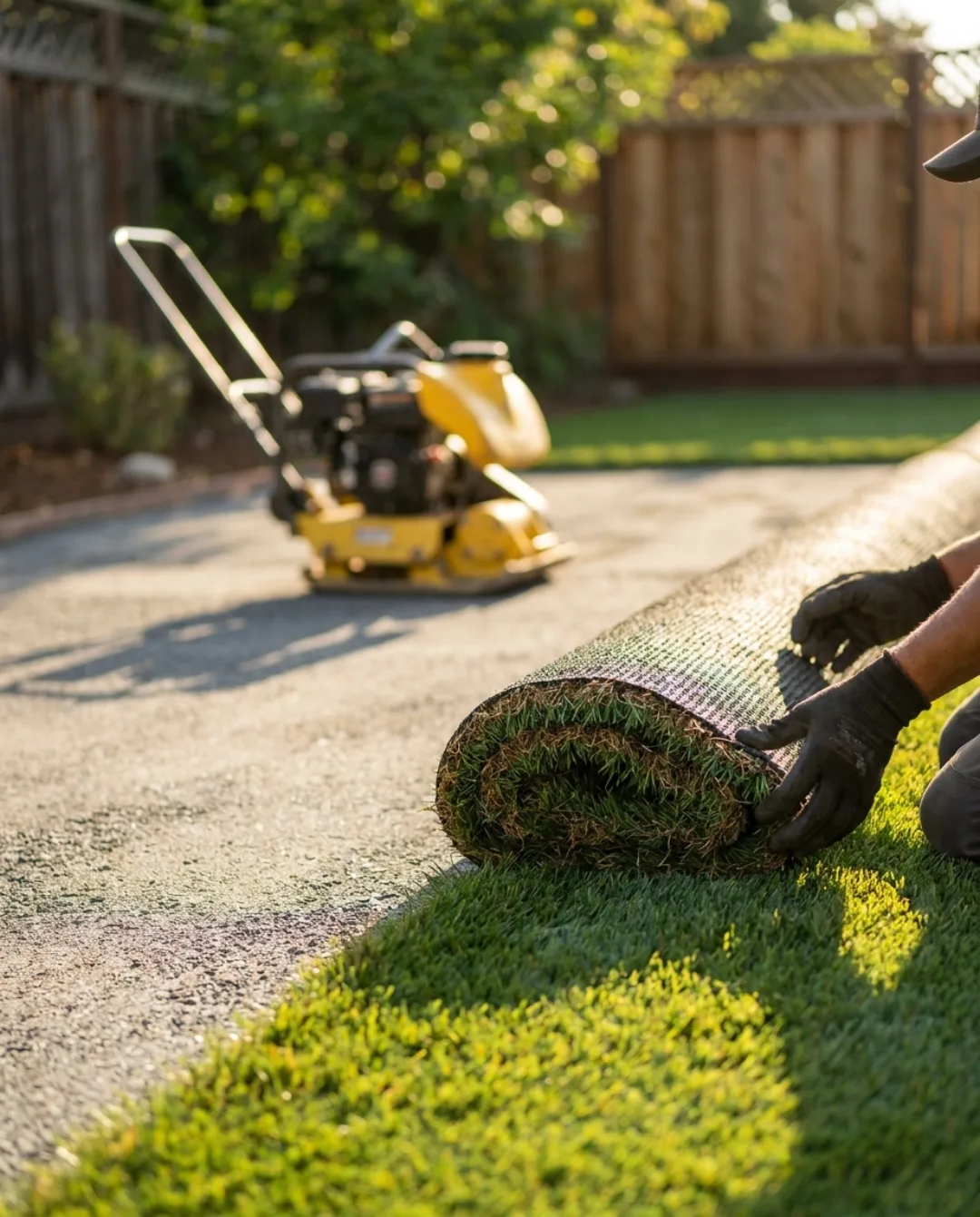
Slaton sits on the level plains of the Llano Estacado in the same semiarid climate band as the rest of the South Plains: long dry stretches, hard summer sun, real winter freezes. Natural sod fights that climate every month; synthetic grass ignores it. UV-stabilized fiber keeps its color through the sun, nothing goes dormant in a freeze, and a properly compacted base does not heave when the ground cycles through freeze and thaw.
There is a practical angle too. Slaton peaked at 7,250 people in 1970 and has been easing back since the railroad relocated operations, which in yard terms means established homes with established lawns, a lot of them running sod that is decades old, thin in the shade and thirsty everywhere else. Swapping a tired lawn for turf is a one-time job that ends the mowing, watering and reseeding cycle instead of repeating it every spring.
Slaton is a railroad town in the present tense, and that industrial habit is a useful lens for a yard build. The parts that matter are structural and invisible: base depth, compaction, seam tape, edge fastening. A yard assembled to that standard, like the Harvey House that has stood beside the tracks since 1912 and once served meals to 42 passengers at a horseshoe counter, gets built once and then simply stays.
It also holds up to crowds, which Slaton produces. This is the Banana Pudding Capital of Texas by act of the Texas Legislature, and the Texas Banana Pudding Festival on the historic City Square drew more than 10,000 people over a Labor Day weekend. City/County Park hosts the annual Fourth of July celebration alongside its baseball fields and swimming pool. A back yard that hosts the overflow from days like those is exactly the kind of surface that wears to dirt in the gate path and under the shade tree, and exactly what a turf build with a heavier face weight in the traffic lanes is designed to answer.