Lorenzo's climate is semiarid, the Koppen BSk on the fact sheet, and the town sits at 3,169 feet over the Ogallala Aquifer inside the part of Crosby County covered by High Plains Underground Water Conservation District No. 1, created in 1951 as the first groundwater conservation district in Texas. In a farm town, water goes where it earns: the cotton, the wheat, the milo. A residential lawn is the one irrigated crop on the block that never pays anything back, and every gallon a sprinkler puts on bermuda is a gallon spent arguing with the region's own arithmetic.
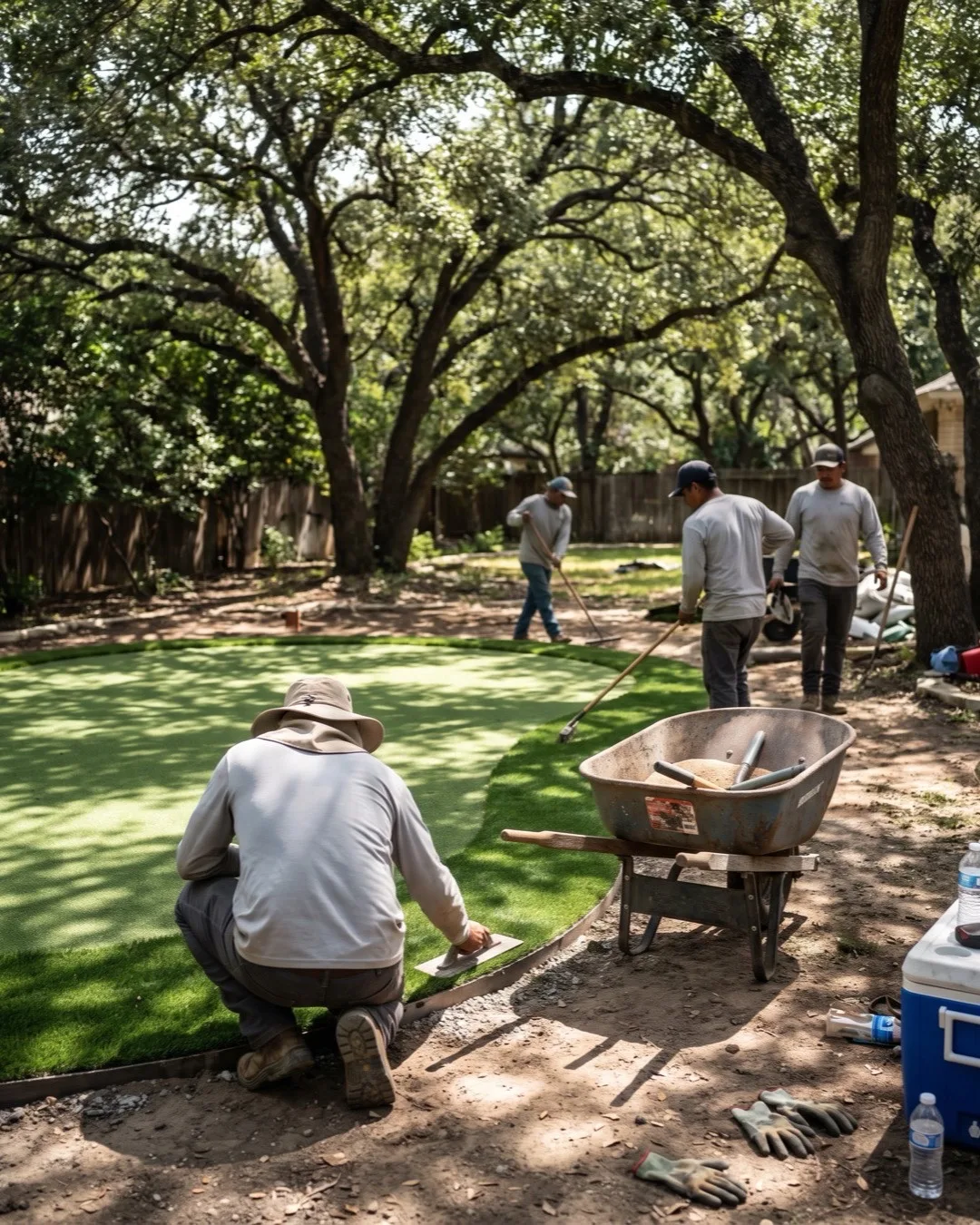
Synthetic turf resigns from that argument. Once the compacted base is in and the turf is fastened and infilled, the surface needs no irrigation at all, ever, and what rain the area does get passes through the perforated backing and out through the base instead of standing on it. The only water a finished turf yard ever asks for is an occasional hose rinse of the dog area. In a town built on managing water carefully, a zero-irrigation lawn is not a luxury, it is the consistent choice.
The local ground helps. Lorenzo sits in the western half of Crosby County, the flat side above the Caprock covered in rich loam, rather than the broken country below the escarpment that takes over farther east and in the county's southwest corner. Flat loam is straightforward to strip, grade, and compact, which keeps the dirt work on a Lorenzo install short and puts more of the budget into base depth and turf. The housing numbers say the rest: the median home here was built around 1966, and of 302 occupied units, 238 are owner-occupied, close to four in five. Those are long-held houses on sixty-year-old yards, where the buried irrigation is generally as old as the sod above it.