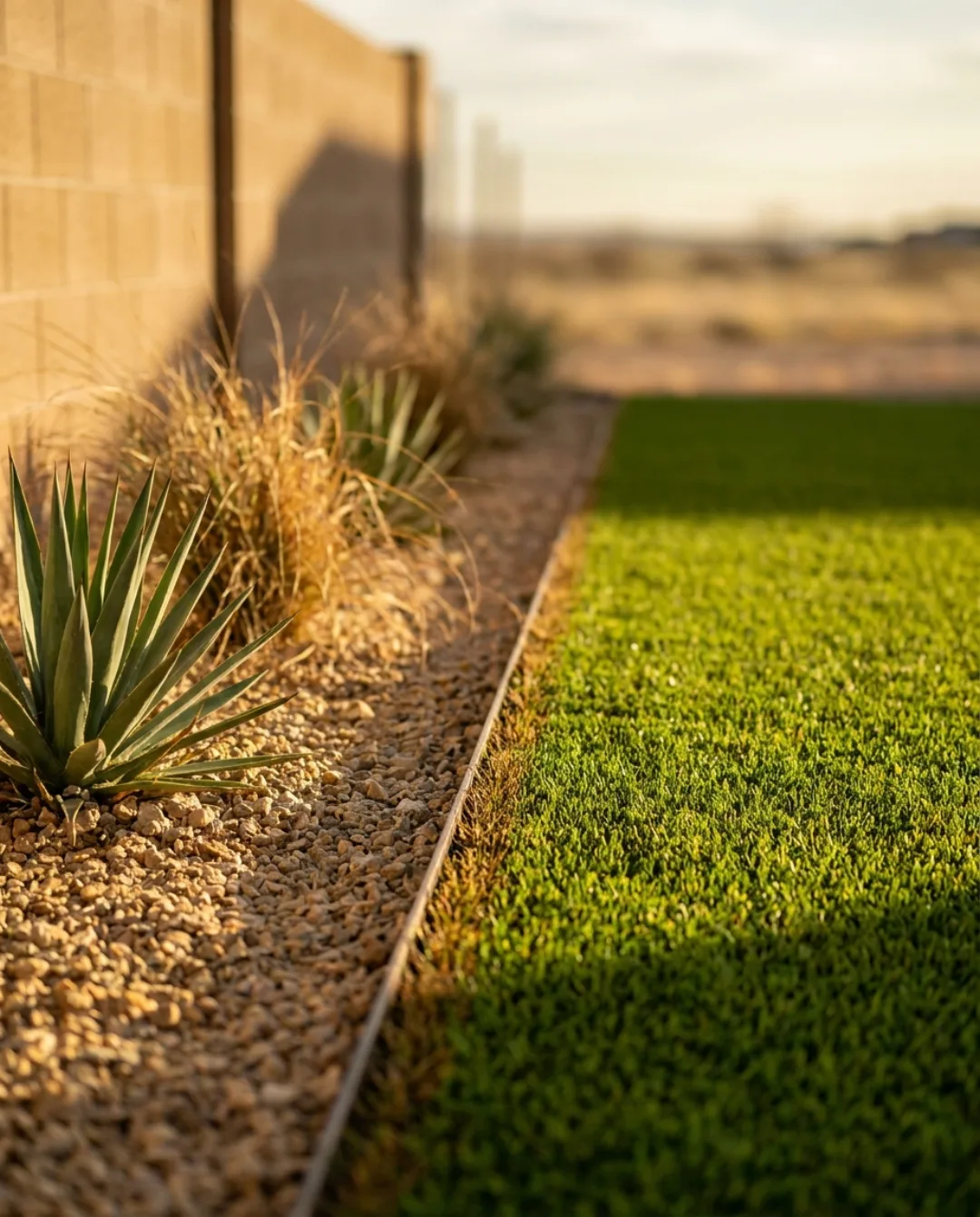
Start with the schedule, because in Plainview it is published and specific. Even-numbered residential addresses get Tuesday and Saturday. Commercial properties, industrial sites, apartment complexes and parks get Monday and Thursday. The city's Water Department makes variance forms available for athletic fields, large properties and special landscape needs, which tells you something in itself: the ordinance assumes some landscapes cannot survive on the default schedule and have to ask permission. A turf lawn never files that form. It looks the same on a Tuesday, a Thursday and the third week of a drought stage.
The supply behind the schedule explains why the city is careful. Plainview is one of the CRMWA member cities, drawing surface water alongside Amarillo, Borger, Lubbock, Slaton, Levelland and the rest of the authority's members, and Hale County also sits entirely inside High Plains Underground Water Conservation District No. 1, whose major aquifer is the Ogallala. Both of those sources are managed, metered and planned for decades out. A yard that stops drawing on them is a yard that stops competing with everything else the town needs water for.
Plainview has watched water shape its economy before. The Cargill beef processing plant, then the largest employer in the city, closed in 2013 after the 2010 to 2012 drought and displaced roughly 2,300 employees. Nobody here needs a lecture on dry years. What has replaced that concentration is a broader employer base, the Walmart Distribution Center on North I-27 with its million square feet and twenty miles of conveyor belts, Azteca Milling, Plainview Bio-Energy, CHS, Pioneer Seed, Larson International and Gebo's among them, plus Wayland Baptist University, which has been headquartered in town since 1909 and now runs campuses in five Texas cities, six states and Kenya. Yards in a working town get used hard by kids, dogs and weekend traffic, and turf is built for that in a way a stressed lawn on two watering days is not.