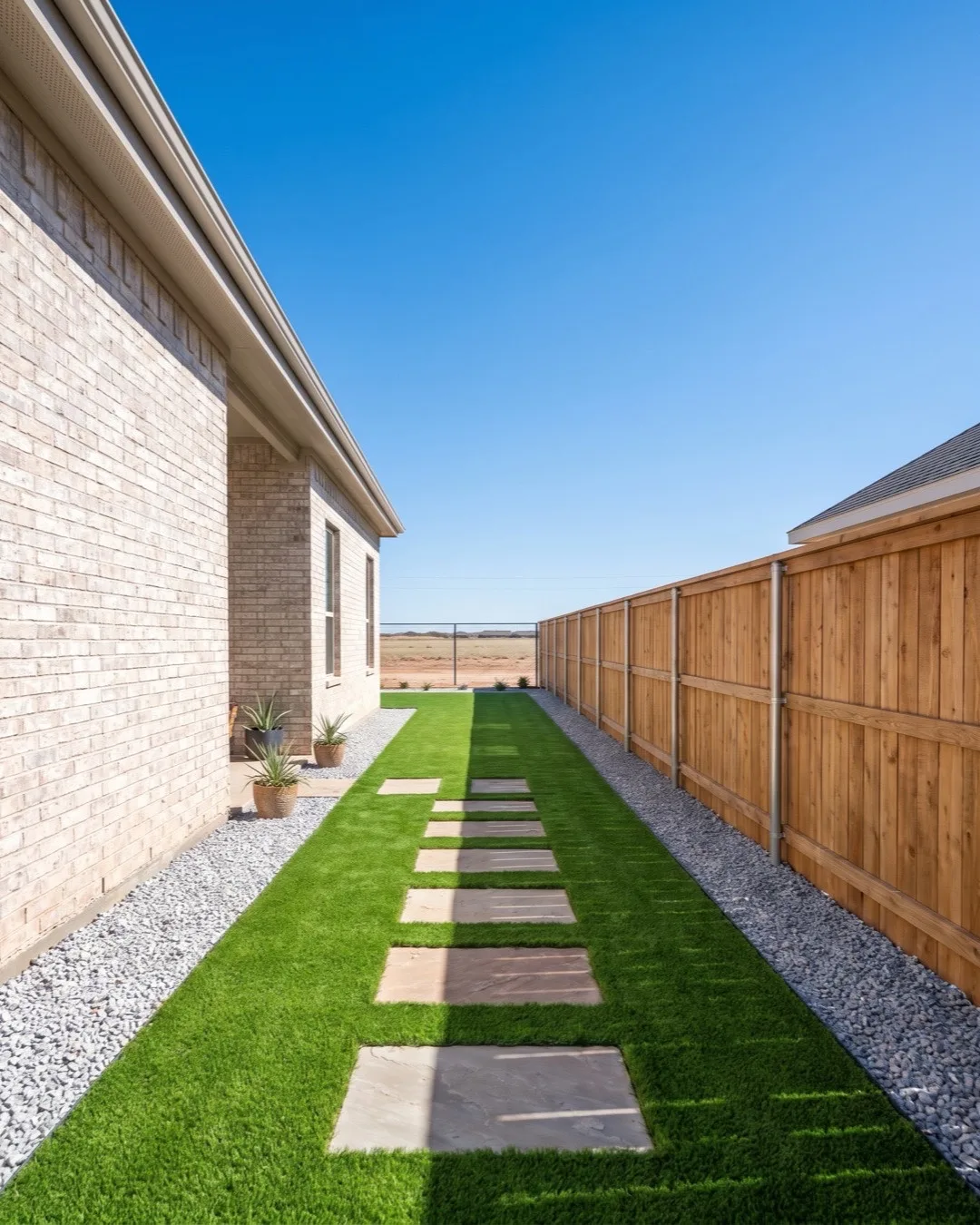
Lamb County is level plains between 3,400 and 3,800 feet, drained by the dry bed of Blackwater Draw and dotted with small playas, Soda Lake, Bull Lake, Illusion Lake, and Yellow Lake among them. Average precipitation runs 18.04 inches a year across a 194-day growing season, which is not enough to carry a lawn without help. Everything green in a Littlefield front yard is green because somebody paid to make it so.
The age of the housing is what makes that expensive. The median home here was built around 1968, and 1,590 of the town's 2,190 occupied units are owner-occupied, so most Littlefield yards are half a century of established sod sitting on irrigation of roughly the same vintage. Old lines leak, old heads drift out of pattern, and the repair bill arrives on top of the water bill. A turf conversion ends both at once: the lines in the work area get located and capped during demolition, the surface never asks for another drop, and the yard's cost drops to an occasional brooming.
Lamb County sits entirely inside High Plains Underground Water Conservation District No. 1, created in 1951 as the first groundwater conservation district in Texas, over the Ogallala Aquifer, the largest aquifer in the country and the major aquifer under this region. The City of Littlefield runs the public water system and keeps a water conservation plan in its city code, Article 13.07, so anyone planning a large live landscape should ask the City at 301 XIT Drive what rules are current. A turf lawn takes that question off the table for the area it covers, because it has no watering schedule to comply with in the first place.