›What do most Lubbock homeowners end up paying for turf?
Installed turf runs roughly $5 to $20 per square foot nationally, and most residential lawn jobs land around $8 to $14, so a typical 500-square-foot yard runs about $4,000 to $7,000. Your number depends on square footage, turf spec, demo, and drainage. Quotes are free and there is no obligation. Full pricing by yard size, and what pushes a quote up or down, is in our Lubbock turf cost guide.
›Is artificial turf good for dogs?
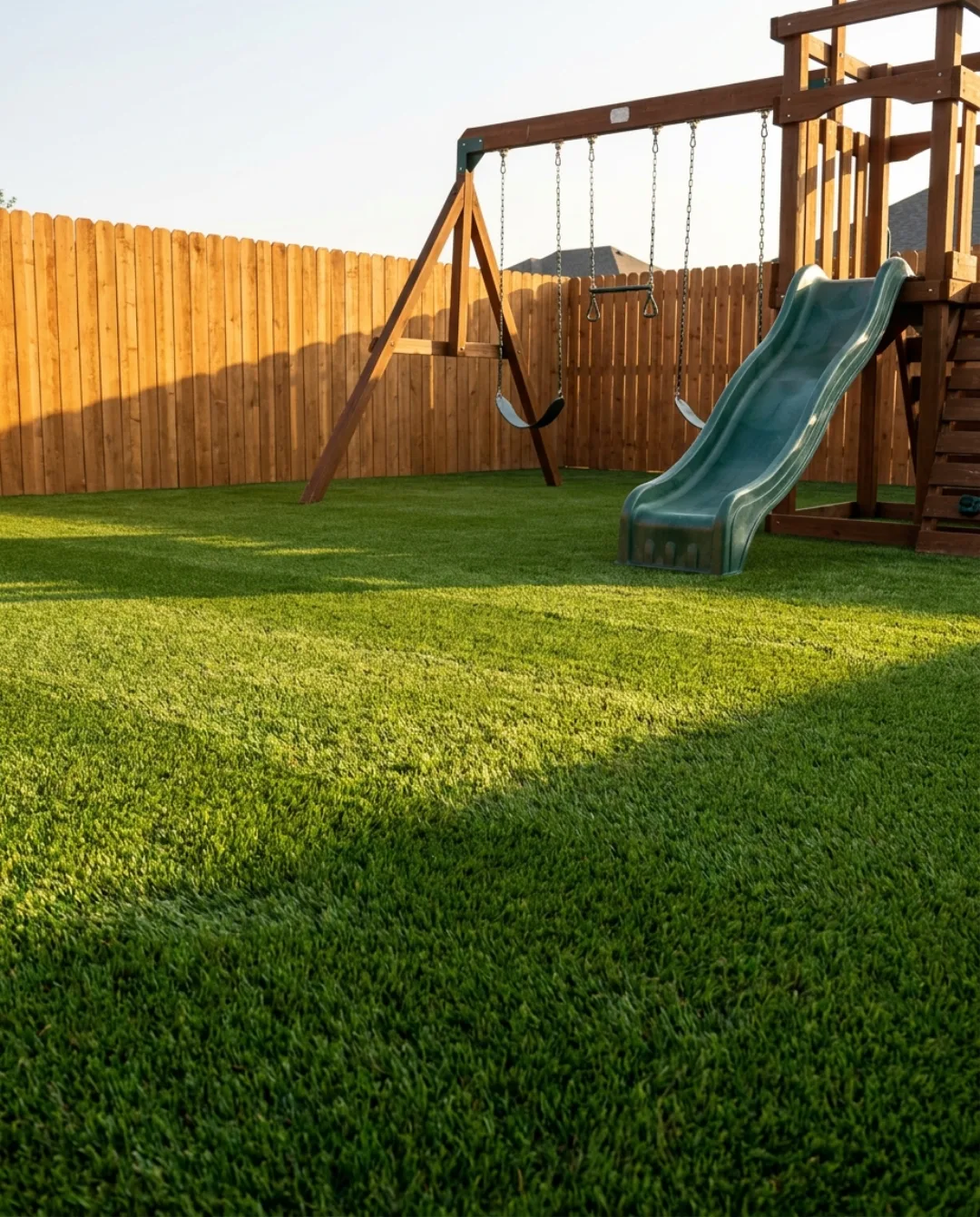
Yes. Pet installs use a fully perforated backing, a base graded with no low spots, and an antimicrobial or zeolite infill instead of plain sand. Urine drains straight through and rinses off with a hose. No mud tracked inside, no dead patches. The drainage base, antimicrobial infill and seam details that make it hold up are on our pet turf installation page.
›Can artificial turf handle West Texas heat, wind, and freezes?
Yes. UV-stabilized fibers are built for full sun, and turf doesn't go dormant in a freeze or brown out in a drought. It warms up in direct August sun like any surface; a rinse or a shade sail brings it down. Wind isn't an issue once the perimeter is fastened and the infill is in. How infill, seams and edging get specified for that movement is covered in our infill, seams and edging guide.
›How much water does artificial turf save?
Nearly all of it. Turf needs no irrigation; the only water it uses is the occasional rinse of a pet area. What that's worth depends on your yard size and your water rates, pull a July bill and work backwards. Pairing turf with drought planting to cut irrigation further is on our xeriscape and drought yard page.
›How many days will the crew be in my yard?
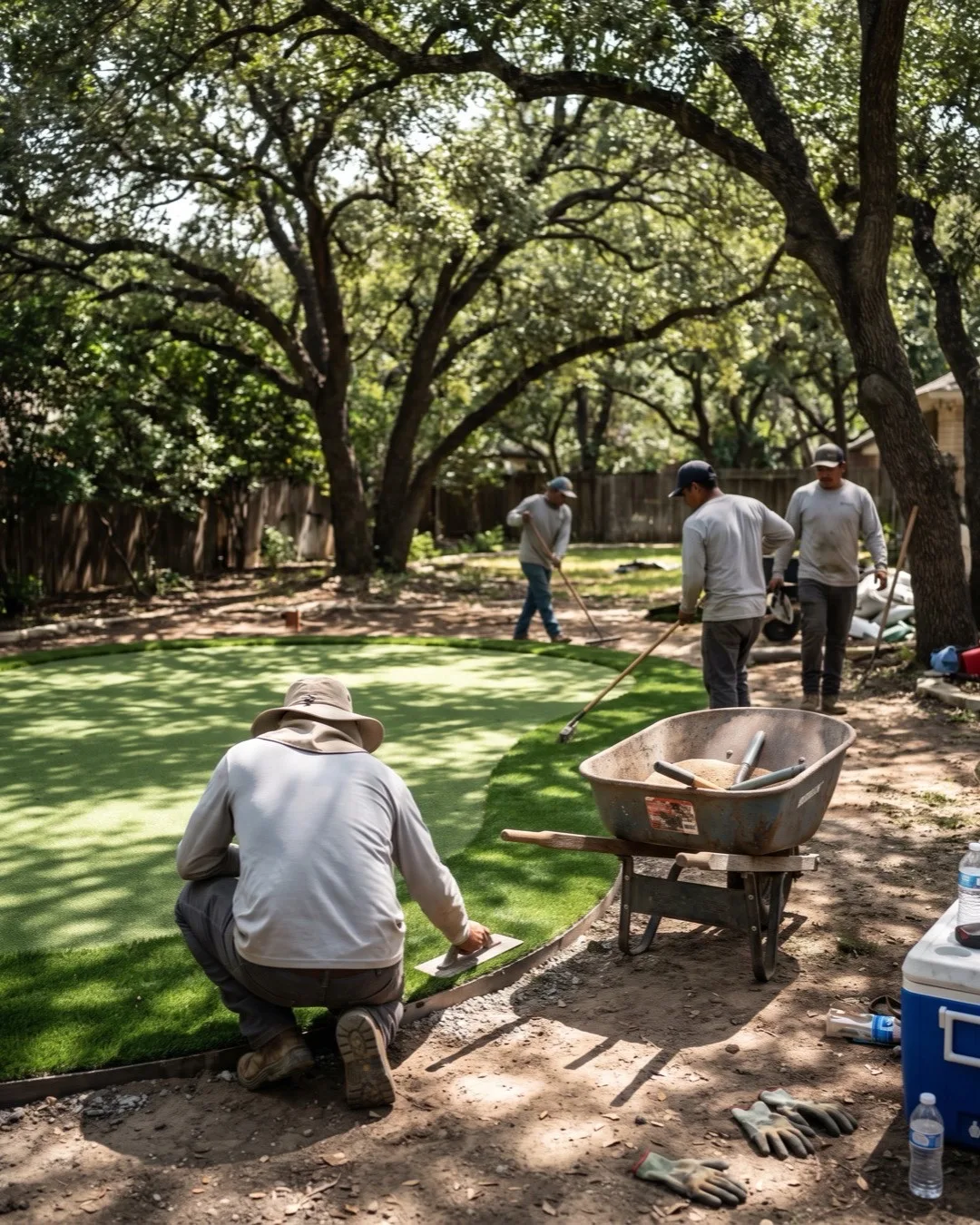
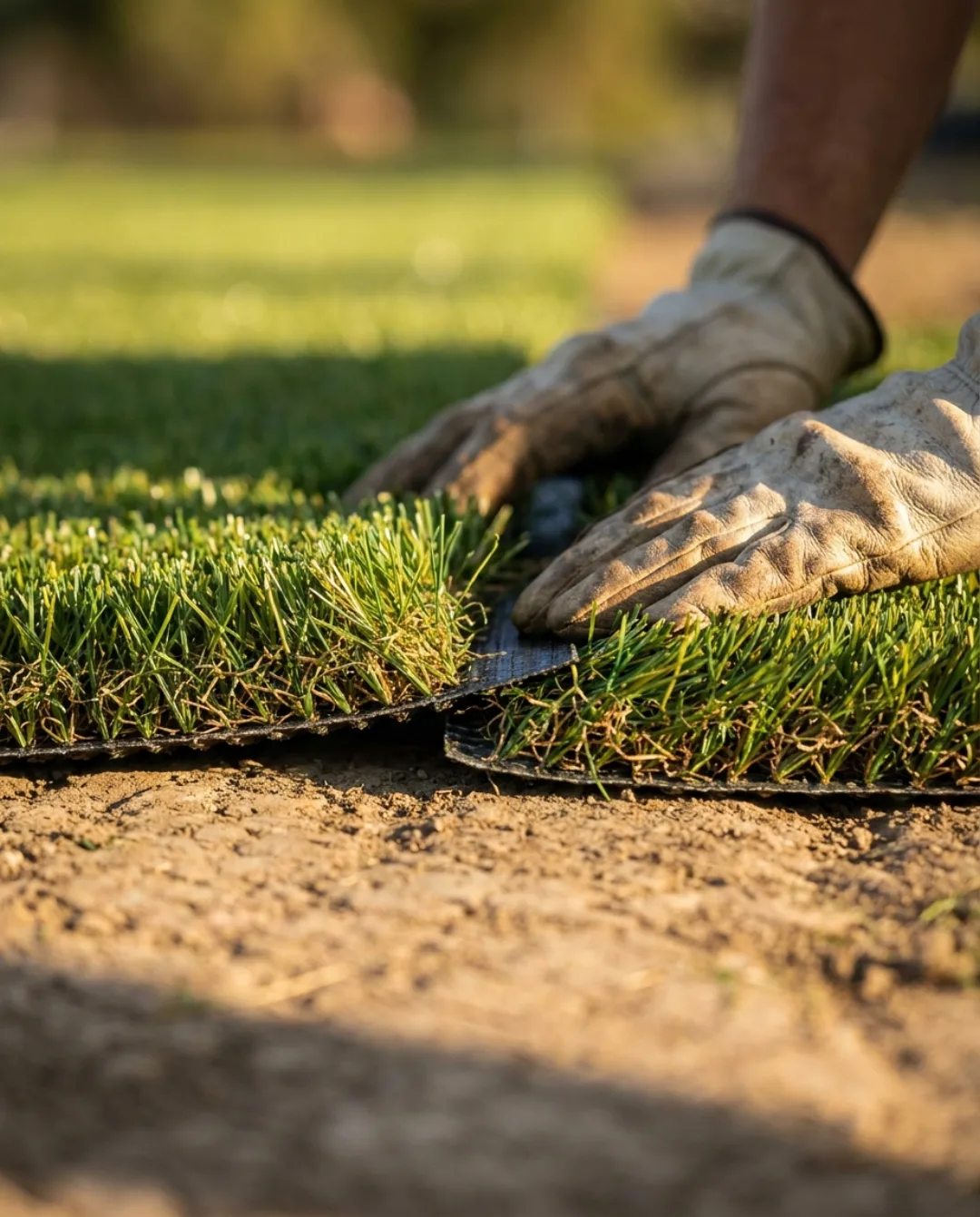
As a typical industry range, two to three days: one for demo and base, one to two more for turf, seaming, and infill. Bigger yards, contoured greens, and drainage work run longer. Scheduling is down to the crew and the scope of the job, so ask when you get your number. The full excavation, base and seaming sequence is broken down on our artificial lawn replacement page.
›How long does artificial turf last?
Manufacturer service-life ratings vary a lot between products, and in practice the base underneath, the traffic on top, and sun exposure decide more than the spec sheet does. A properly built base usually outlasts the turf sitting on it. Sun, traffic, and infill upkeep decide where in that range you land. We run the lifetime numbers against sod, water and mowing on our is artificial turf worth it page.
›Does artificial turf drain properly?
Yes, through the perforated backing and out through the compacted base underneath. Drainage is a base problem, not a turf problem. A yard that ponds today needs that fixed before turf goes down, and it's one of the first things worth checking on any turf project. Draining over a hard surface takes a different build, covered on our turf on concrete and patios page.
›What maintenance does artificial turf need?
Very little. Blow off leaves, rinse pet areas, and power broom the high-traffic paths once or twice a year. Infill gets topped off every few years. No mowing, no watering, no seeding, no fertilizer. For deeper cleaning, pet odor and infill top-ups, see our turf cleaning service page.
›Is artificial turf the same thing as fake grass or AstroTurf?
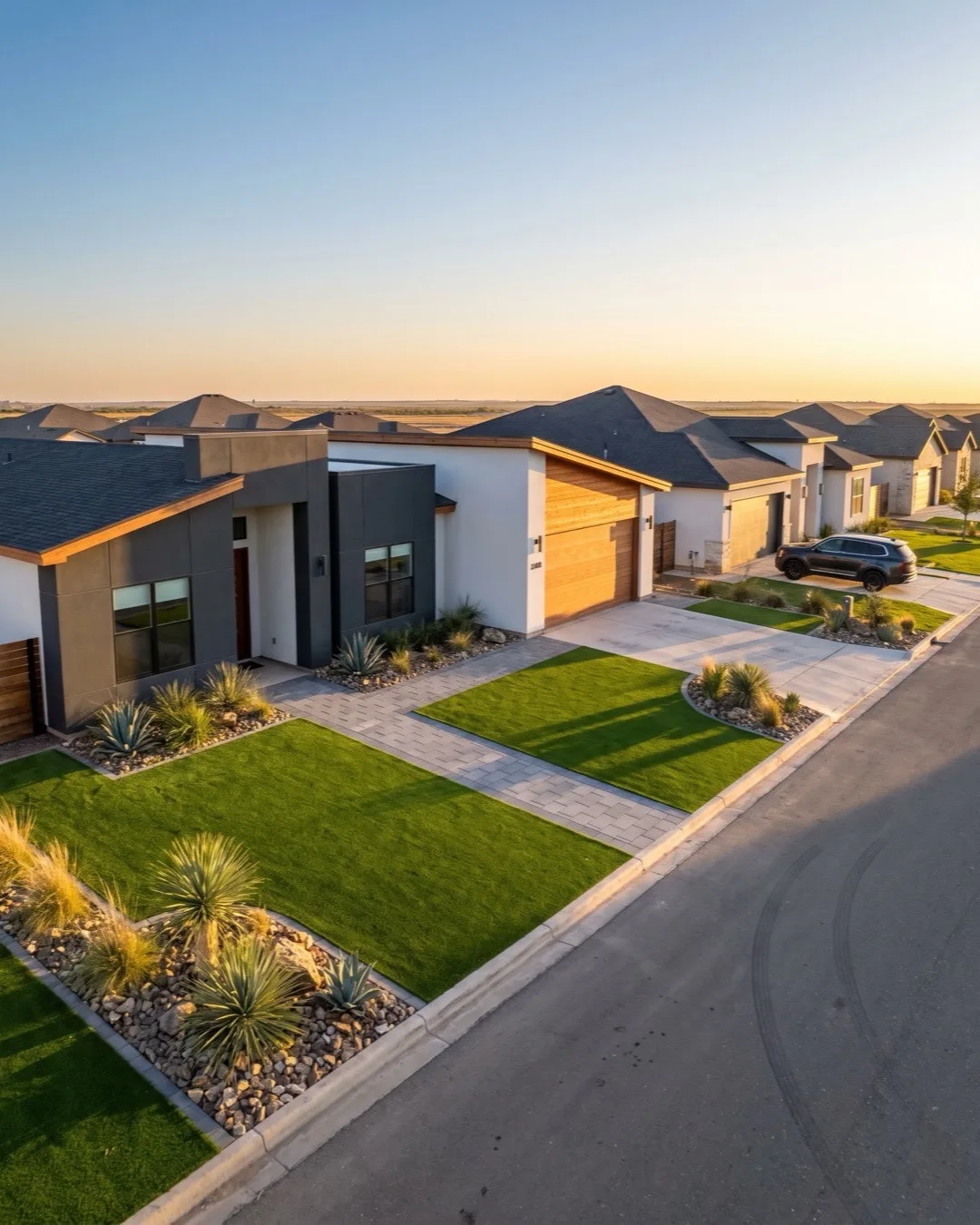
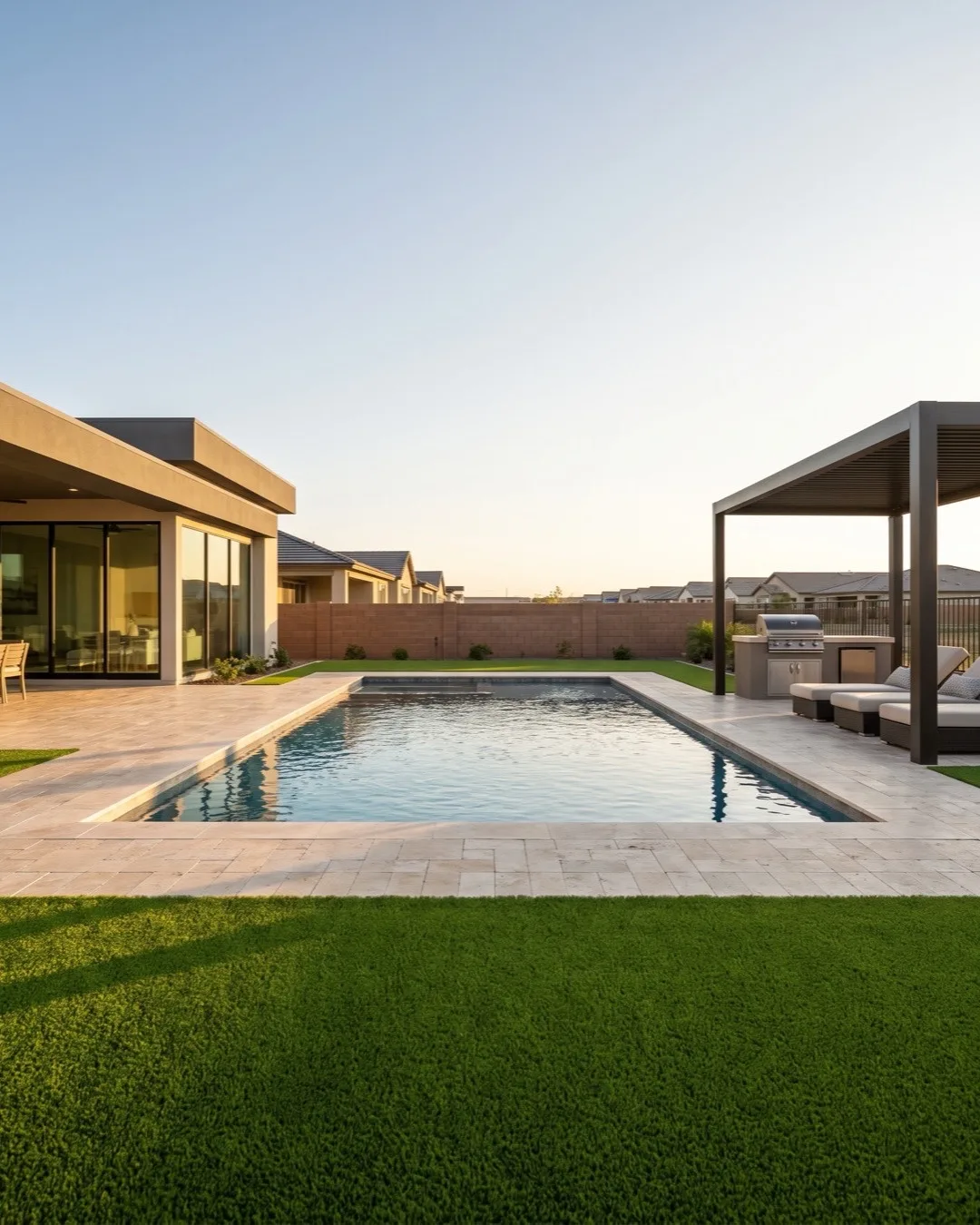
Same family, different generations. AstroTurf is a 1960s brand name that stuck, and what people call fake grass or an artificial lawn today is modern synthetic turf: multi-tone blades, a brown thatch layer, and a draining base. Whatever you call it, the quote works the same way — measured by the square foot, priced with the spec named. You can see what modern artificial grass actually looks like installed on our front yard artificial grass page.